Right now, humans use up a lot of rare-earth metals for electronic parts, from batteries to devices to spacecraft. They are not rare, but when they are found, they are in very low levels. The demand for these materials is skyrocketing but since it is a nonrenewable resource, they will eventually become depleted. Fortunately, scientists have discovered a new method of gathering rare earth elements from landfills.
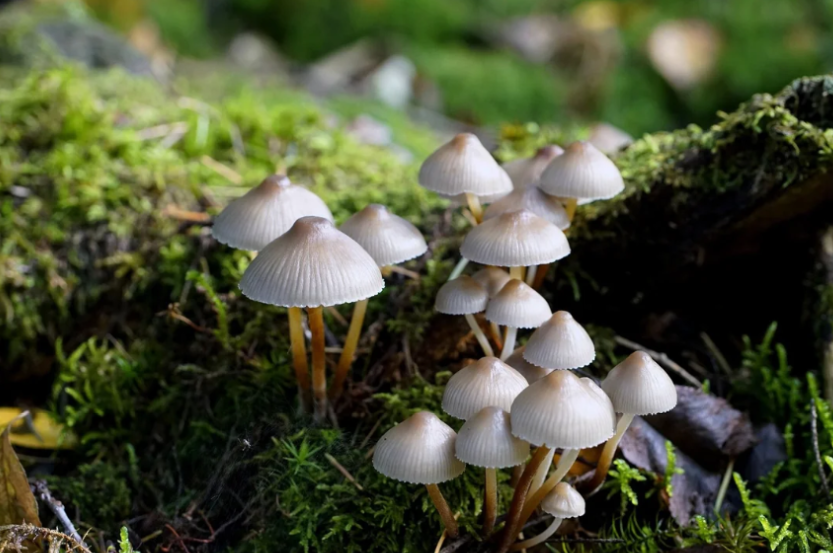
Mushrooms are the only part of most fungi that we usually see. They are the reproductive structures that the fungus uses to release its spores. But under the soil, there is a vast network of thread-like structures called mycelium, which help the fungus to absorb things from the soil. These mycelium can absorb metals from the soil and concentrate them within the fungus. Two scientists, Alexander Bismarck and Michael Jones from the University of Vienna, helped to discover this unique property of fungi and have called the process “mycomining.”
This unique capability of fungi has led scientists to explore its use in industrial waste areas such as slime dams, mine tailings, and landfills. It can absorb the rare earth metals from our waste and enable them to be recycled. Past methods of this are painstaking, expensive, and involve the use of toxic chemicals to separate certain metals from everything else. Using fungus is way cheaper and easier. This could prove very valuable in a future where the demand for rare earth materials skyrockets and the availability continues to go down.
Rare earth metals are not the only mind-blowing thing that mycelium can absorb. Other studies have shown that fungus can absorb toxic chemicals from the soil such as lead, which could be a crucial aid to us for cleaning up polluted areas. Growing and picking a few mushrooms is easier than digging up a bunch of toxic soil and replacing it. Also, scientists observed a black fungus thriving around the site where there was a massive nuclear disaster at the Chernobyl Nuclear Power Plant. Scientists discovered that the fungus used a chemical called melanin to absorb the nuclear radiation produced by the radioactive materials at the site and convert it to energy, similar to how plants use sunlight. Not only that, but the fungi reduced the amount of radiation in the area, meaning that it is helping to restore it after the disaster.
Cites –
https://carboncredits.com/rare-earth-demand-to-triple-by-2035-can-the-u-s-catch-up-with-china/
https://www.fastcompany.com/3029694/mushroom-gold-miners-can-suck-up-the-metals-from-our-trash
https://www.kew.org/read-and-watch/fungi-hidden-dimension
https://www.smithsonianmag.com/science-nature/can-scientists-harness-the-magic-of-mushrooms-to-clean-up-polluted-landscapes-180986561/#:~:text=Fungi%20can%20convert%20complex%20toxins,problems%20at%20the%20same%20time.%E2%80%9D
https://www.forbes.com/sites/scotttravers/2024/11/02/this-black-fungus-might-be-healing-chernobyl-by-drinking-radiation-a-biologist-explains/