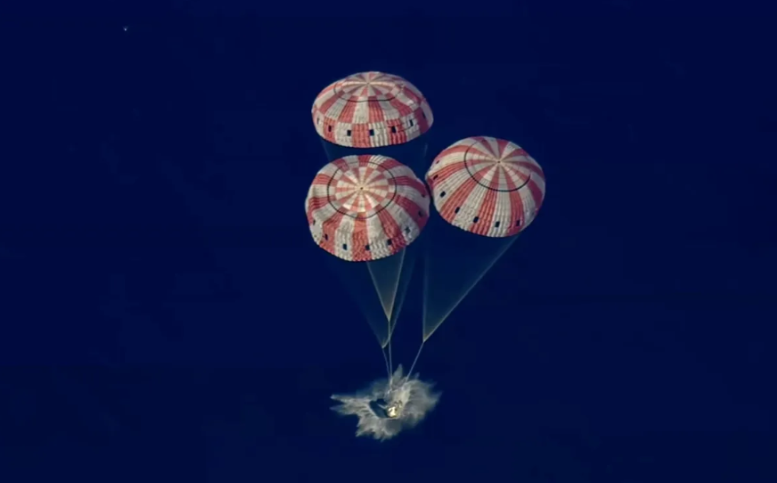
At 8:07 pm Eastern Standard Time, the Orion space capsule containing the crew for the Artemis II Mission splashed down in the Pacific Ocean off the coast of San Diego, marking the end of a 694,481 mile journey to the far side of the moon that took 10 days. The commander of the mission, Reid Wiseman, reported that all of the members of the crew were in excellent condition upon their return to Earth. The mission gave us a glimpse of the far side of the moon, brought back stunning photos of both the moon and Earth, and gave us confidence in our ability to send humans into deep space.
The Artemis mission completed an orbit around the Earth before going around the moon and getting pulled back to Earth by Earth’s gravity for a splashdown landing. The crew ventured 257,756 miles into space, farther than anyone has ever been. They studied life support systems on spacecraft and did many medical experiments on how being in space affects the human body. They also discovered and captured some amazing details of the far side of the moon that have never been seen before. Some of these things include greenish and brownish tints on plateaus on the moon, active footage of space rocks hitting the moon, and pictures of the Earth rising over the moon.
The Artemis II Orion space capsule contains 330 feet of habitable space. But even with the limited space, the capsule contains many essentials, like exercise equipment, personal hygiene, toilets, and beds. The astronauts had to exercise for at least 30 minutes a day to combat the effects of being in space on the human body. They couldn’t shower but used soap, water, and shampoo to keep clean. They had to be strapped down to their beds because of the effects of microgravity. A new feature, the $23 million space toilet, was a facility that no other moon missions have had. The toilet stopped working on the way to the moon, and the crew figured out that the issue was a frozen pipe. The crew turned the capsule to face the pipe to the sun, melting the ice and creating a temporary fix to the problem.
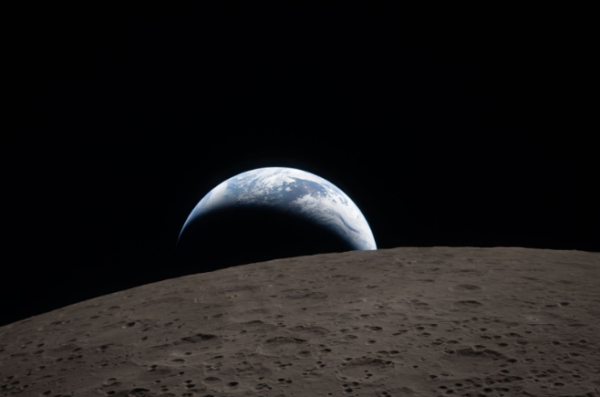
April 6, 2026, 6:41 pm EDT: Earthset captured from the window of the space capsule, with Australia and Oceania visible in the daylight side of Earth under swirling clouds.
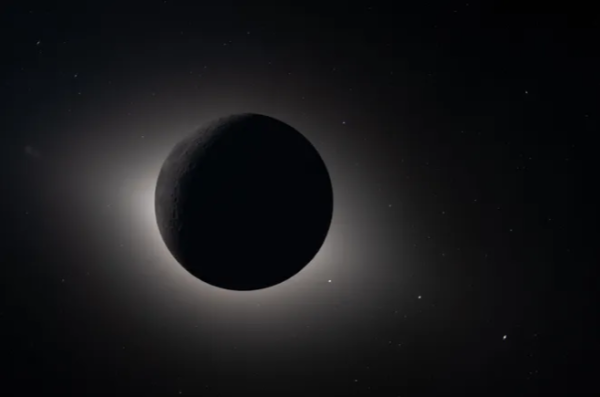
April 6, 2026: a solar eclipse visible from the far side of the moon, with 54 minutes of totality.
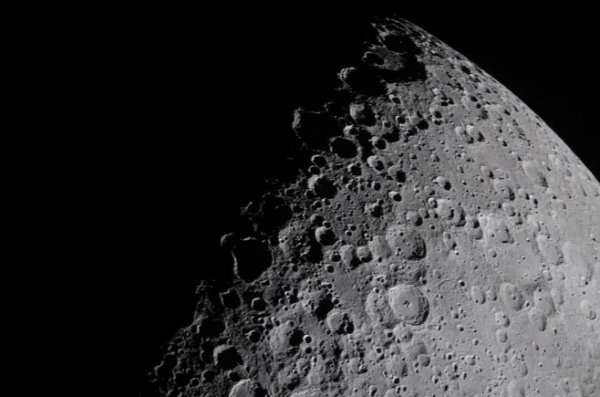
April 6, 2026: A view of the line between night and day on the moon, with the angle of the sunlight creating dramatic shadows of the moon’s craters.
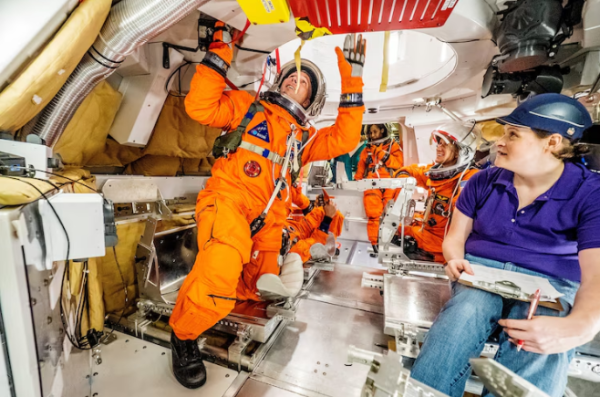
The inside of the Orion space capsule.
Cites –
https://www.theguardian.com/science/2026/apr/10/artemis-ii-landing-return-moon-mission
https://www.nasa.gov/gallery/lunar-flyby/
https://www.usatoday.com/picture-gallery/news/nation/2026/04/07/dark-side-moon-artemis-ii-crew-photos/89502497007/
https://abcnews.com/GMA/News/life-artemis-ii-astronauts-inside-tiny-orion-spacecraft/story?id=131554765
https://www.bbc.com/news/articles/c87wy05wr4no
https://spacenews.com/orion-splashes-down-to-successfully-end-artemis-2-mission/