On December 11, 1972, the lunar module Challenger of the Apollo 17 mission landed on the moon, carrying aboard it 2 crew members that were the last people to land on the moon. 50 years later, NASA prepares to launch its Artemis II mission, with its launch date taking place in March 2026, and though it will not land directly on the moon, it will pass very close to the unexplored side of it, setting important records as NASA’s first crewed lunar mission in over 50 years.
The crew members are Reid Wiseman(commander), Victor Glover(pilot), Christina Koch(Mission Specialist), and Jeremy Hansen(Mission Specialist). The mission will take 10 days in total.
Artemis II is a big deal because it will venture into space further than we have ever been before. Other moon missions landed on the side of the moon closer to the Earth, but Artemis II will fly by the far side. The main goals of the lunar missions are to reclaim our capability of exploring deep space, studying how the conditions of outer space affect the body, and paving the path for future moon missions and possibly human-crewed missions to Mars.
There are going to be several studies that the crew will conduct on the lunar mission. The crew will study the unexplored side of the moon and its craters, volcanic activity, and tectonic plates. NASA will also find out more about how being in space affects the human body and things like sleep, activity, and overall well-being. This will help NASA in the future with its Artemis III mission and is another step in putting humans on Mars one day. Another purpose of the mission is to set new records in terms of diversity: it will enable the first woman(Christina Koch), and the first person of color(Victor Glover) to be part of a lunar mission.
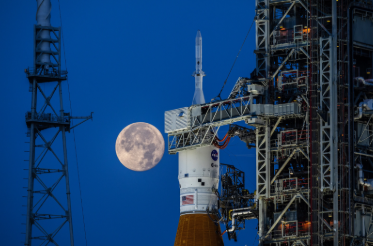
The rocket’s take off was originally scheduled for Friday, February 6, but will be delayed due to a problem found with the rocket during a simulation. The rocket, containing over 700,000 tons of hydrogen fuel, was leaking hydrogen from the bottom, meaning that it’s not safe to launch it soon. The launch has been postponed to no earlier than March 2026. The lunar module will follow what’s called a “free return trajectory,” or where the spacecraft will propel itself around the moon and then get pulled right back to Earth because of its gravity, requiring no fuel. After a 3-4 day long journey to reach the moon, it will pass 4,000 to 6,000 feet above the moon’s far side before coming back to our planet.
Cites –
https://airandspace.si.edu/stories/editorial/why-did-we-stop-going-moon
https://www.nbcnews.com/science/space/nasa-astronaut-moon-launch-artemis-ii-wet-dress-rehearsal-rcna255626
https://www.nasa.gov/humans-in-space/artemis-ii
https://www.wionews.com/photos/what-is-artemis-2-mission-and-why-is-it-important-for-entire-humanity-1770071388450/1770071388453
https://www.nasa.gov/mission/artemis-ii/
https://www.scientificamerican.com/article/how-to-send-your-name-to-the-moon-with-nasas-artemis-ii-mission/