

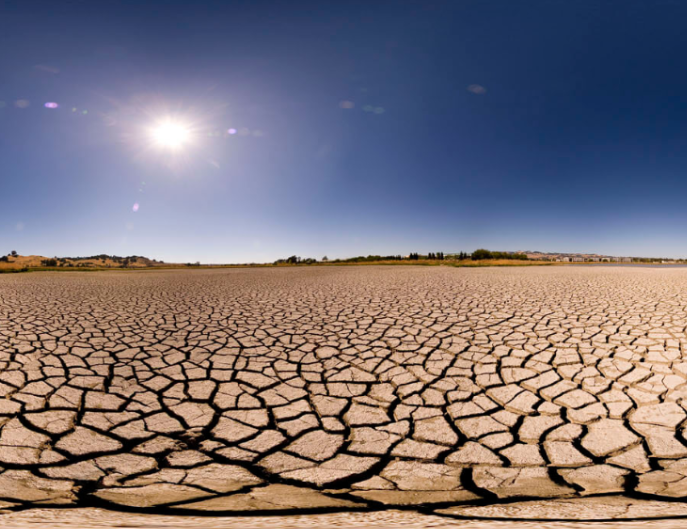
Climate change is an ongoing environmental disaster, and it is the reason for the loss of many different species of animals and plants on Earth. According to NASA, climate change is “a long-term change in the average weather patterns that have come to define Earth’s local, regional, and global climates,” and changes have been “observed in Earth’s climate since the mid-20th century [and] are driven by human activities, particularly fossil fuel burning…” Our current president, Donald J. Trump, flatly denies the existence of climate change and its threats. Many other world leaders, on the other hand, have very different views. Some countries are in danger because of this environmental crisis and cannot stand by the opinion that it doesn’t exist.
United States of America
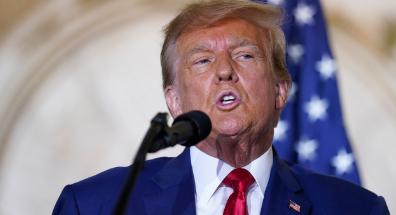
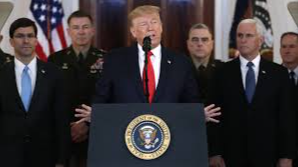
Trump’s administration once dismissed the threats of global warming. Now, it straight up denies the scientific evidence about climate change, saying that it doesn’t exist. On July 1, 2025, it took down and cut funding to the U.S. Global Change Research Program, a 35-year endeavor to track the effects of climate change. The administration fired hundreds of scientists that were working on a new version of the National Climate Assessment, which is a “congressionally mandated report used to prepare for extreme weather events,” according to the New York Times. It also fired people who were studying climate change, then hired five new people that put out a report that stated the following: human activity is indeed heating the planet; however, some warming that is due to fossil fuels is actually just because of natural cycles or variability in the sun. This is simply not scientifically possible. These reporters also claimed that extra carbon dioxide in the atmosphere is boosting crop yields, sea levels are not rapidly rising, and risks from extreme weather events are over-dramatized. This August, Trump canceled construction on a wind farm that was almost completed and already had $6 billion invested in it. The plant had enough power in it to bring electricity to nearly 350,000 homes in Connecticut and Rhode Island. Luckily though, a judge was able to recommence the project in September. Many people know that fighting climate change can be costly, therefore making it more unappealing to fight. However, what they might not realize is that there is a cost for inaction, too. For example, deadly heat waves, extreme weather, the extinction of species, and the decline of crop yields can bring about steep prices as well. Not only would the U.S. be affected by this, but countries all over the world would too. Different world leaders all have different opinions and views on climate change, and they could be in serious danger if nothing is done to help this issue.
Kenya
William Ruto, the president of Kenya, was interviewed by a New York Times reporter to hear his opinions on climate change and how his country is struggling. One question that was asked was, “Talking to your countrymen, how do you explain your focus on something that can seem very abstract to people who are still just struggling to get by?” In response to this, Ruto explained how many people in his country are struggling and how climate change is real. He says, “Droughts made millions of Kenyans go hungry. Floods just in the city of Nairobi killed over 30 people. Nobody can persuasively tell any Kenyan that climate change is abstract. It is not.” The next question that Ruto was asked was about whether or not international collaboration efforts to change climate change will be successful if the U.S. is “rowing in the other direction.” This is what he said in response: “I am very confident that the position of the United States, of China, of Europe, of Africa must come together at some point. We may disagree for a moment, we may disagree for a while, but reality is going to beat us into an agreement. The effects of climate change are in every continent. The only difference is that developed countries can cushion themselves.”
Finland
The next leader that was interviewed was Prime Minister Petteri Orpo of Finland. This country has cut down on carbon emissions while simultaneously growing their economy in attempts to help climate change, a rather unusual approach. Finland hopes to be carbon neutral by 2035; however, they will still be dependent on oil due to shipping fuel. The main question that Orpo was asked was, “You’ve been working on this issue for many years now. What was the moment when you felt the most personal disillusionment about the politics around climate change?” In response, Orpo said the following: “About five to 10 years ago, there was a debate in my own country over whether climate change is true or not. And because I believe it is, and I’m deeply worried about our world and our planet, that debate was frustrating. But we won. Today we have new technologies. We can change our behavior without cutting our welfare. We just have to believe that it’s possible, and we have to continue our work.” Finally, Petteri Orpo was asked if China is becoming a better partner to Finland since the United States’ retreat on clean energy. He responds, saying that Finland must be cautious, no matter what. He said they have to “get rid of dangerous dependencies” because they must be “autonomous in clean-energy production.”
The Marshall Islands
This country that is made from islands and reefs in the Pacific Ocean is a mere few feet above sea level. Not only are the rising sea levels causing problems such as flooding for this county, but also other problems such as mosquito-borne diseases and tuna, which are “an economic backbone,” fleeing for cooler parts of the ocean. President Hilda Heine says that they “will be submerged by 2050 if the world doesn’t do its part.” Also interviewed by a New York Times reporter, Heine shared her thoughts on what must be done in her country and what other countries must do for them, too. Heine says that she wished other developed nations and big emitters would help put money into elevating two of her communities, a project that has been projected to cost billions. One question Heine was asked was “What specific steps are you taking in the Marshall Islands?” which ties into the next question, “What are some of the changes that your people have had to make?” She says, “The warming of the ocean is killing our corals… We are currently doing research to determine species of coral that can survive the warming ocean. We are building a fleet of ships that use wind and solar power to replace our fossil-fuel-run shipping fleet.” Some changes that the Marshall Islands have had to make include building seawalls, an embankment that prevents the ocean from eroding an area of land. “Seven years ago, Majuro had no sea walls. Now we build seawalls to protect homes and schools. I mean, we used to be able to just walk into the lagoon. Now you have to go over sea walls to get to the lagoon side or to the ocean side. The landscape is different,” says Heine. When asked whether or not she believes her country will survive, Heine states, “As the leader of the Marshall Islands, I cannot take the view that we cannot survive,” a rather empowering statement.
Bangladesh
Finally, Bangladesh. This country has a primarily young population that is densely packed, and extreme heat along with rising sea levels are significant problems. Because of this, agriculture is being disrupted and populations are forced to move. Muhammad Yunus, the government’s chief adviser, won the Nobel Peace Prize in 2006 for creating a way to give low-income people small loans, calling it “an example of the way small individual actions can produce widespread change.” He believes that the same is possible with the climate. The first question Yunus was asked was about how Bangladesh is experiencing climate change at the moment. In response, he discussed how not only is the water rising and swallowing up the land, but it is also bringing harmful materials onto the land. He says, “We have to make use of every little space we’ve got in order to feed ourselves. But not only is our land sinking into the ocean; the water system brings saline water into the land because of the tide. And salinity eats up our cultivable land. So sum total is our land is getting squeezed. It’s not a very happy situation.” Next, Yunus was asked about how much he thinks international efforts on climate change have succeeded. “We try to solve everything by pouring money into it. That’s not the solution. I’m saying I have to change myself. That’s how the world will change.” These powerful words by Yunus describe how he does not believe that money is going to fix everything, but rather the people changing. Finally, he was asked, “What do you think the developed countries that have historically been responsible for most global emissions owe a country like Bangladesh?” Yunus responds with rather inspiring words: “Look, this is our home. You start a fire in your part of the home, you suffer. But you do something to start a fire in my part of the house — this is not a fair thing to do. You are destroying the whole home. Our life depends on what you do.”
Cites-
https://www.pbs.org/newshour/nation/judge-lifts-trumps-halt-of-nearly-complete-offshore-wind-energy-project
https://www.pbs.org/newshour/show/economic-fallout-mounts-as-trump-halts-near-finished-wind-power-project
https://science.nasa.gov/climate-change/what-is-climate-change/#:~:text=Climate%20change%20is%20a%20long,present%2C%20and%20future%20climate%20change.
https://www.nytimes.com/2025/09/22/briefing/climate-change-world-leaders-kirk.html
https://www.nytimes.com/2025/09/18/us/trump-climate-denial-banquet-kimmel.html
https://www.momscleanairforce.org/trump-oil-and-gaslighting-playbook/





Viv R • Nov 20, 2025 at 7:18 pm
Oh my golly gosh jeepers Ella this is SO WELL WRITTEN!!!