Alex Honnold is a famous rock climber who is known for his incredible free solos, or climbing routes without a rope or any protection if you fall. He has done a free solo on many rock formations, including the 3,000 foot monolith El Capitan in Yosemite, which he was the first human ever to climb. On January 25, 2026, he added a new record-breaking feat to his collection: free soloing one of the world’s tallest skyscrapers.
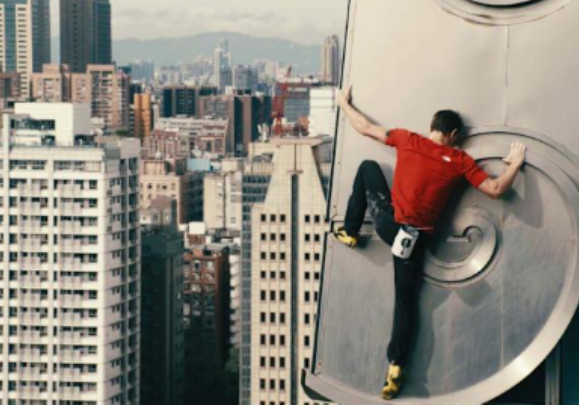
When Honnold began his climb at the base of Taipei 101, in Taiwan, there was a huge crowd of onlookers. He scaled the building up one of its corners, using the metal pieces that trim the windows as footholds and occasionally having to climb up an ornamental structure on the side of the building. People watched from the windows of the building, and cameramen recorded his climb while hanging from harnesses and ropes. When he arrived at the top, 92 minutes after he started climbing, he balanced himself on the top of the tower and took selfies. He had just climbed the world’s largest urban free solo at 1,667 feet tall. After that he went down on a rope with a harness.
Training for an urban climb is much different than training for climbing on rocks, because of the lack of grip on the holds and the boxy edges that do not typically occur naturally. “On Taipei 101, you’re basically grabbing the same holds, almost the whole way up the building,” said Honnold. He described them as “big metal box pinches” (pinches are a type of hold in climbing where you have to pinch the hold to stay up because they don’t have a pocket for your hand to go into.)
To train for this, he did a unique type of pull-ups where he gripped the two vertical and square-shaped bars of a squat rack and did pull-ups while in this demanding position. He prepared for having to do hundreds of these reps because of the amount of climbing on these holds that he would have to do. The most demanding part of Honnold’s climb, though, was the eight “bamboo boxes,” or a pagoda-style stack of eight-floor sections toward the top of the building, which was very challenging since there were overhanging sections.
Honnold uses extreme focus to concentrate on the task of climbing, even when he is aware that one wrong move can mean death. He has an advantage because of his underactive amygdala, or the part of the brain that is capable of feeling fear. But Honnold still has to have an extreme amount of focus to do what he does. Honnold described his climb as feeling “infinite,” and said that he “lost track of space and time.” On the very last stretch of the climb, while climbing the tower’s highest spire, he said he was “happy tired.”
Honnold’s climb had live coverage on Netflix on Sunday. They had a 10-second delay, so that just in case he fell they could cut off the footage. But Honnold ended up completing the whole climb without error. He got paid 500,000 dollars for doing this on live TV. He commented on this saying that it was an “embarrassing amount.”
Cites –
Https://www.nbcnews.com/world/asia/alex-honnold-describes-rope-free-climb-Taipei-101-skyscraper-Netflix-rcna255906
https://www.tcn.tw/news/6779911
https://optimizemindperformance.com/alex-honnold-mental-skills/
https://www.aol.com/articles/alex-honnold-reveals-scariest-thing-181422262.html